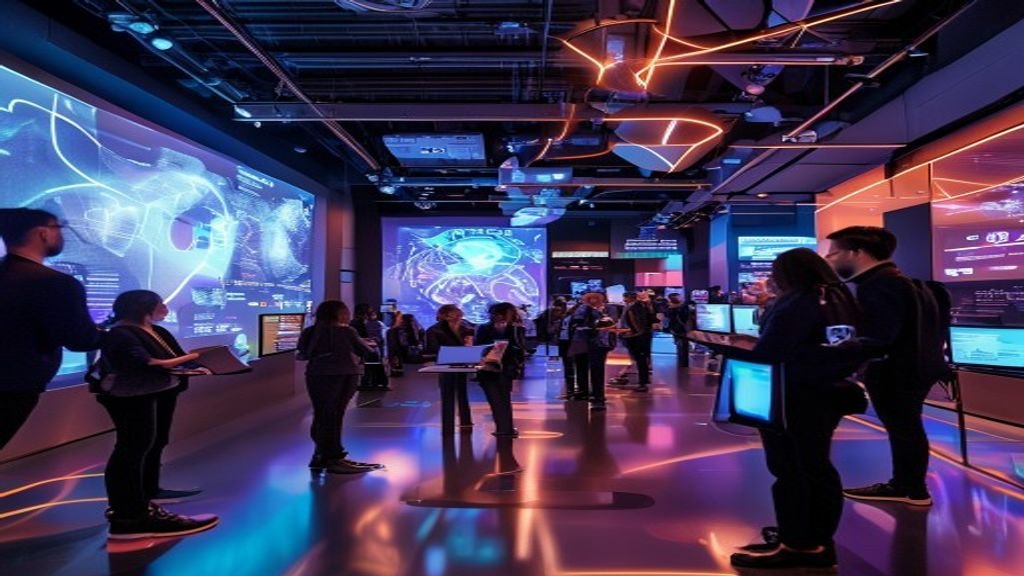
At Possible, marketers embrace AI — but keep the human layer in view
At this year’s Possible, AI wasn’t a side conversation. It was the conversation.
Across the event, marketers appeared to be moving past the earliest phase of AI fascination and into something more grounded. The tone was less about bold replacement narratives and more about adaptation: how to use new tools in real workflows without stripping out the human qualities that make marketing work in the first place.
That shift matters. A year ago, many AI discussions in marketing still carried a sense of spectacle. Now the mood is more practical. Teams are asking where AI can save time, where it can sharpen execution and where it still falls short.
At the center of that debate is a familiar tension: efficiency versus authenticity. Marketers want the speed, scale and optimization AI promises. They also know audiences can spot generic, machine-smoothed work pretty quickly. That creates a balancing act for brands trying to move faster without sounding flatter.
Possible reflected that tension clearly. AI is increasingly being folded into campaign planning, content workflows, media analysis and internal productivity. But even as adoption expands, marketers are drawing boundaries around what should remain decisively human: brand instinct, creative judgment, emotional nuance and real relationships.
That doesn’t mean the industry is backing away from AI. Far from it. The direction of travel is clear. Marketers are actively testing how generative tools and automation systems fit into day-to-day operations. They are also getting more realistic about what “fit” actually means.
For some, AI is becoming a support system for early-stage ideation, drafting and variation. For others, it is a way to accelerate repetitive work, surface patterns faster or reduce manual lift in campaign management. In both cases, the appeal is obvious: more output, faster cycles and potentially leaner execution.
The catch is that scale alone is not the goal. Marketing still depends on taste, timing and context. AI can generate options. It cannot reliably know which message feels right for a brand moment, which creative idea is genuinely differentiated or which customer signal matters more than the rest. Those calls still belong to people.
That’s why the conversation at Possible seemed to be settling into a more mature frame. Instead of asking whether AI can do marketing, many marketers are asking which parts of marketing should be automated and which parts should be protected. That distinction is becoming central to how brands structure teams and workflows.
There is also a trust layer running through all of this. As AI-generated content becomes easier to produce, marketers face a new risk: flooding channels with material that is technically efficient but emotionally thin. If every brand can generate endless copy and creative variations, distinctiveness gets harder to hold onto.
In that environment, the human layer becomes more valuable, not less. Strategy, editorial sensibility, cultural awareness and customer empathy are turning into differentiators. AI may lower the cost of production, but it also raises the premium on judgment.
That helps explain the tone marketers brought to the event. The industry appears eager to use AI, but less eager to hand it the wheel. There is growing recognition that speed without direction can create more noise than value. And automation without oversight can damage consistency just as easily as it improves efficiency.
Why it matters
AI is quickly becoming infrastructure for marketing teams. The competitive edge now comes from how brands deploy it: not as a shortcut to replace human thinking, but as a tool that clears space for better decisions, sharper creativity and stronger customer connection.
That’s likely where the next phase of the industry lands. Not anti-AI. Not AI-first at all costs. More like AI-with-intent.
For agencies, platforms and brand teams, that means building systems where automation can handle repetition and acceleration, while people stay responsible for taste, accountability and the final shape of the work. The promise of AI is real. So is the risk of overusing it.
Possible made one thing clear: marketers are no longer just reacting to AI’s arrival. They are negotiating terms with it. And right now, the smartest position seems to be simple — use the machines, keep the humanity.
Key takeaways
- AI is moving from novelty to everyday marketing infrastructure.
- Teams are focusing on practical workflow gains, not just futuristic talking points.
- Human judgment remains central in strategy, creativity and brand stewardship.
- The real challenge is scaling output without losing originality or trust.
The AI era of marketing is here. The question now is who can use it well without becoming indistinguishable in the process.
Sources
- Digiday — Marketers at Possible adjust to the realities of AI while trying to stay human