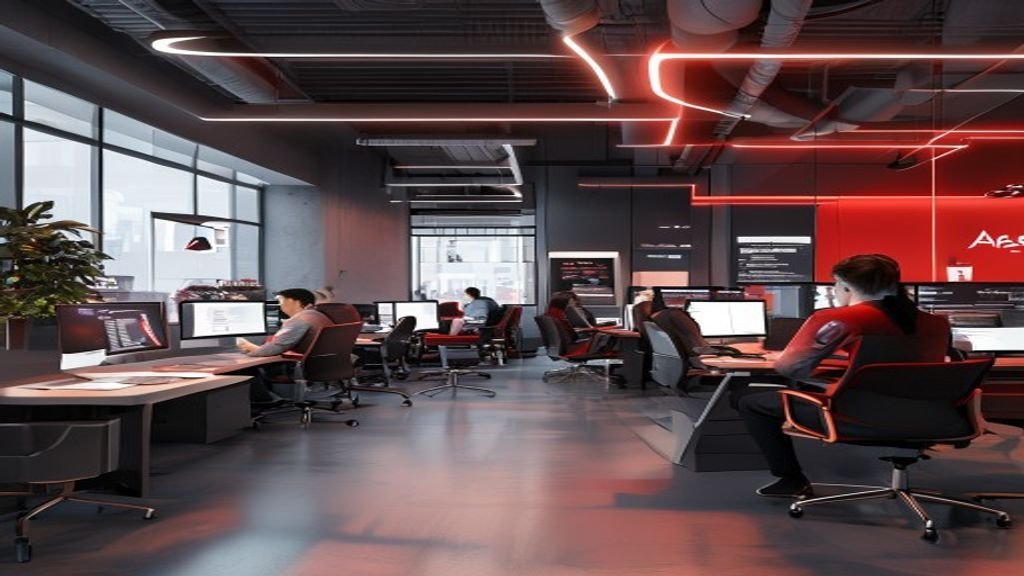
How Ace Hardware built an AI assistant for its workforce
AI has moved past the pilot phase in a lot of boardrooms. The harder question now is what actually sticks inside a business once the hype cools off.
At Ace Hardware, the answer appears to be an employee AI assistant designed to help staff find information faster and make everyday work less clunky. Instead of leading with a consumer-facing chatbot or a shiny marketing stunt, the company has focused on an internal tool built around practical use.
That choice says a lot about where enterprise AI is heading. For many brands, the first big win may not be a public product at all. It may be a system employees use every day to search internal knowledge, get quick answers, and cut down on repetitive tasks.
For a company with a broad network, layered operations, and a lot of information spread across teams and systems, that kind of assistant can solve a very real problem. Employees often lose time bouncing between documents, platforms, and workflows just to locate one usable answer. AI promises a shortcut, but only if the tool is grounded in the actual way people work.
Ace’s approach fits a wider pattern now taking shape across retail and adtech-adjacent businesses. The market is shifting from broad AI ambition to narrower, more useful deployments. The pitch is less about replacing workers and more about removing friction.
That matters in retail, where speed and consistency are everything. If employees can get faster access to policies, product knowledge, process guidance, or internal support, the ripple effects can reach operations, customer experience, and even campaign execution. A smoother internal workflow often becomes an external advantage.
Why it matters
Retailers have spent the past year talking about AI in customer service and marketing. Ace Hardware’s internal assistant points to a different, increasingly important use case: operational AI built for employees first. That matters because practical internal tools can shape how fast large organizations adopt AI at scale.
There is also a governance angle here. Building an employee assistant is not the same as dropping a general-purpose chatbot into the workplace and hoping for the best. Internal AI has to be trained or connected carefully, pointed at the right sources, and structured so that answers are useful rather than merely fluent.
That is where many enterprise AI efforts get tested. A tool can sound smart and still fail if employees do not trust it. Accuracy, permissions, relevance, and update speed all matter. If the assistant returns outdated guidance or vague responses, adoption drops fast. If it consistently saves time, employees will keep coming back.
For marketers and adtech watchers, this kind of internal build is worth paying attention to even if it is not directly tied to media buying. The same infrastructure that powers internal search and workflow support can eventually influence how an organization handles analytics, content operations, campaign management, and retail media coordination.
In other words, internal AI can become the plumbing for future commercial applications. A company that learns how to govern AI well on the inside is in a stronger position to expand it into customer-facing or revenue-generating use cases later.
Ace Hardware’s move also reflects a broader reality: the most valuable AI products in enterprise settings are often the least glamorous. They do not need to go viral. They need to work on a Tuesday afternoon when an employee needs an answer in seconds, not after digging through five systems and three PDFs.
Key points
- Ace Hardware is focused on an AI assistant built for employee use rather than a flashy consumer-facing chatbot.
- The initiative reflects a broader enterprise trend toward practical AI that improves search, support, and routine workflows.
- Internal assistants can become a foundation for future marketing, commerce, and retail media applications if they prove useful and trustworthy.
- For large organizations, the real challenge is not just building AI tools but making them accurate, usable, and safe for everyday work.
The bigger takeaway is simple. AI adoption inside large companies is becoming less about spectacle and more about utility.
If Ace Hardware’s assistant proves useful to employees, that is the kind of result that matters most: not AI for the demo, but AI that earns its place in the workflow.
Sources
- Digiday — How Ace Hardware built its employee AI assistant