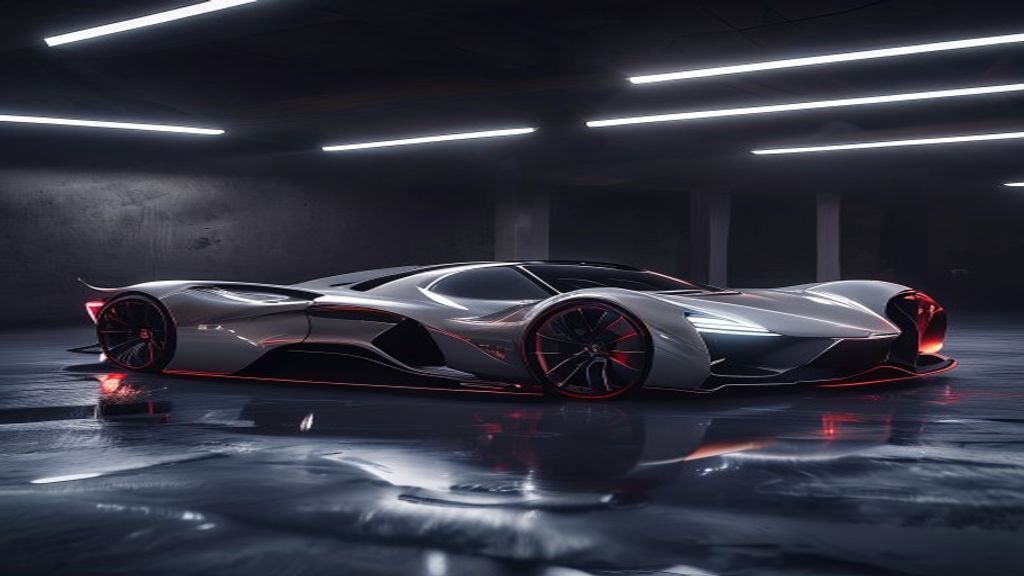
Why Ferrari’s polarizing Luce still matters in the EV era
Not every new car needs to win the internet.
That’s the sharper takeaway from the reaction around Ferrari’s Luce, a vehicle that has already managed to split opinion in exactly the way high-profile launches often do now. Some people hate the look. Some think it misses the point of Ferrari. Others see it as a necessary, if uncomfortable, step into a different kind of future.
And that may be the whole point.
For a brand like Ferrari, broad public approval has never been the main metric. Attention matters. Identity matters. The ability to signal status, exclusivity, and forward motion matters even more. If a new model creates debate but still fits the company’s long-term strategy, the noise around it can be more feature than flaw.
The backlash also lands at a moment when the luxury and performance car market is under pressure to evolve fast. Electrification has changed the design brief. Software is becoming part of the product story. Heritage brands are now trying to preserve mystique while updating what performance means in an era that no longer revolves around engine sound alone.
That makes every reveal feel bigger than a single car.
The Luce, at least in the conversation surrounding it, has become a proxy battle over whether legacy supercar makers can move into the electric era without losing the emotional charge that made them iconic in the first place. That is a hard transition to manage. Ferrari is not just selling transportation. It is selling myth, sensation, and a very specific kind of aspirational image.
Which is why the most useful question is not whether everyone likes the Luce. They won’t. The better question is whether Ferrari can shape a new visual and technical language that its actual buyers will still see as desirable.
Why it matters
The reaction to Ferrari’s Luce says less about whether the car will succeed and more about how the auto industry is changing. In the EV transition, even heritage brands are learning that attention, identity, and market positioning can matter as much as universal praise.
That distinction matters because online automotive discourse is often loud, immediate, and not especially predictive. People react to photos, clips, rumors, and first impressions with total confidence. But luxury vehicles do not live or die by comment sections. They live or die by whether a small, wealthy customer base buys into the story.
In that sense, controversy can actually help. A car that gets ignored is in deeper trouble than a car that gets mocked for a week and then becomes impossible to stop talking about. Polarization keeps a launch in circulation. It invites comparison. It forces a brand into the center of the culture feed.
Ferrari is hardly the only automaker dealing with that dynamic. Across the mobility space, companies are trying to balance legacy expectations with new technology stacks, changing regulations, and a customer base that wants both innovation and familiarity. That tension shows up in everything from EV interiors to software features to exterior styling that tries to look futuristic without alienating loyalists.
For ultra-premium brands, there is another complication: they are expected to lead, not follow. If a company like Ferrari releases something that feels too safe, it risks looking timid. If it swings too far, it gets accused of abandoning its roots. There is no neat path through that.
The Luce debate reflects that trap. People want transformation, but only the kind they personally approve of. Brands don’t get that luxury. They have to pick a direction and live with the first wave of backlash.
Key points
- Ferrari’s Luce is generating backlash, but polarizing design is not always a business problem.
- Luxury automakers often target a narrow, wealthy buyer base rather than broad public approval.
- The EV era is forcing legacy performance brands to rethink what makes a car feel desirable.
- Online criticism can amplify visibility instead of slowing momentum.
There is also a broader industry lesson here. As mobility shifts, the winners may not be the brands that avoid controversy. They may be the ones that can absorb it, redirect it, and keep their positioning intact. Design risk, in that context, becomes part of the operating model.
So no, it may not matter that people hate the Ferrari Luce. What matters is whether Ferrari understands exactly which people do not matter, and which ones still do.
That is a very different calculation from internet approval. And for the companies shaping the next phase of performance mobility, it is probably the only one that counts.
Sources
- TechCrunch — TechCrunch Mobility: It doesn’t matter that people hate the Ferrari Luce