Uber’s next AV play: using everyday drivers as a rolling sensor network
Uber may be lining up a new role in the self-driving economy, and it’s less about replacing drivers overnight than putting them to work in a different way.
The company is reportedly interested in turning its massive network of drivers into a distributed sensor grid that could gather road data for autonomous vehicle companies. In plain terms, that means using cars already out on the street to help collect the raw information needed to build, maintain, and refresh maps and other driving intelligence.
It’s a sharp twist on the usual self-driving narrative. For years, much of the conversation around autonomy has focused on robotaxis, fleet operators, and the long-term question of what happens to human drivers. This idea flips that framing. Instead of treating drivers only as labor that automation might someday replace, Uber could use its existing driver footprint as infrastructure.
That matters because self-driving systems do not run on software alone. They depend on a huge amount of real-world data: lane configurations, road work, curb changes, traffic patterns, signage updates, and the endless small shifts that make cities messy. Even advanced systems need current information, and keeping that information fresh is expensive.
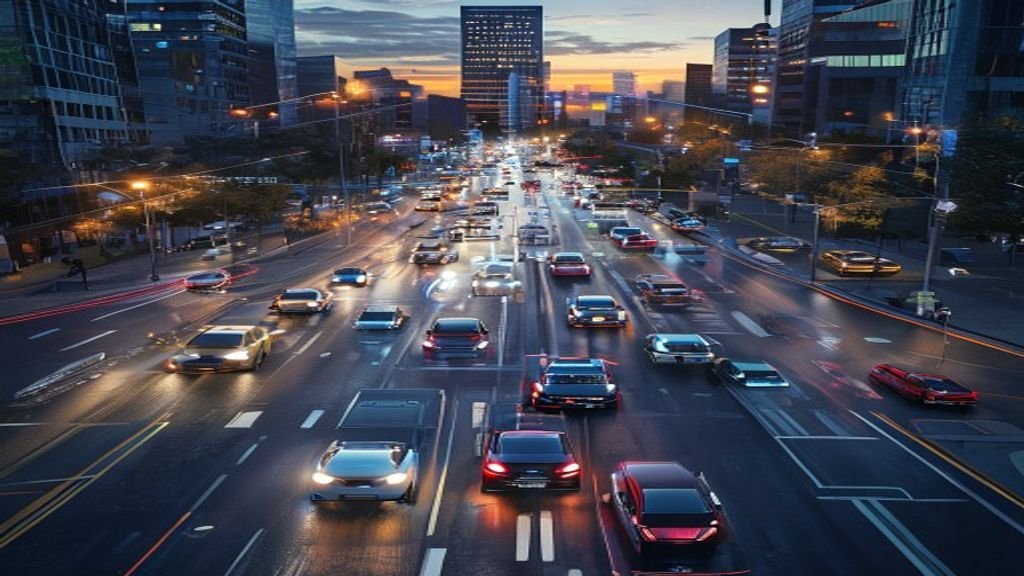
A ride-hailing network has one thing most AV companies don’t: constant movement across countless streets. Uber already has vehicles traveling through dense urban cores, airport routes, suburban corridors, and neighborhood roads every day. If the company can capture useful data from those trips, it could offer something highly valuable to autonomous vehicle developers without having to own every part of the AV stack itself.
There’s a broader strategy hiding inside that move. Uber has spent years navigating the gap between being a transportation platform and being a transportation technology company. Building a full self-driving operation from scratch is expensive, slow, and risky. Becoming the connective tissue around autonomy is a different bet. It gives Uber multiple ways to stay relevant whether AV adoption moves fast, slowly, or in uneven pockets.
For self-driving companies, a setup like this could help solve a very practical problem. Streets change all the time. Construction zones appear. Pickup areas shift. New traffic patterns emerge. A network of human-driven vehicles equipped to collect signals from the road could provide a steady stream of updates from places autonomous fleets may not cover often enough on their own.
For Uber, the appeal is obvious. It already has scale. It already has road presence. And it already sits between riders, drivers, and transportation demand in a way few companies can match. Turning that footprint into a data product would be a way to monetize the network beyond the fare itself.
Of course, the details would matter a lot. Any system built around data collection raises immediate questions about hardware, driver participation, data quality, privacy, and how much of the process is visible to riders and drivers. There is also the challenge of making sure crowd-collected road intelligence is accurate enough to be genuinely useful for AV applications, where bad data can create real safety problems.
Key points
- Uber is reportedly exploring a model where human-driven vehicles collect road data at scale.
- That data could be valuable for self-driving companies that need frequent map updates and real-world street visibility.
- The idea would let Uber leverage its existing network without waiting for a fully autonomous fleet of its own.
- A driver-powered sensor layer could turn routine trips into infrastructure for the broader AV industry.
There’s also a symbolic angle here. The autonomous vehicle race is no longer just about who builds the best car or the smartest model. It’s increasingly about who controls the inputs: maps, edge-case road data, operational coverage, and the systems that keep fleets current. In that world, a giant ride-hailing network can become more than a customer funnel. It can become a foundational layer.
That doesn’t mean every Uber driver suddenly becomes part of a robotaxi future tomorrow. But it does suggest the company is thinking beyond the old binary of human drivers versus autonomous vehicles. A hybrid era may be more commercially useful, and more immediate, than the all-robot future that once dominated the pitch.
If that’s where Uber is heading, the message is pretty clear: the road to autonomy may be built not just by self-driving cars, but by the millions of human-driven miles already happening every day.
Sources
- TechCrunch — Uber wants to turn its millions of drivers into a sensor grid for self-driving companies