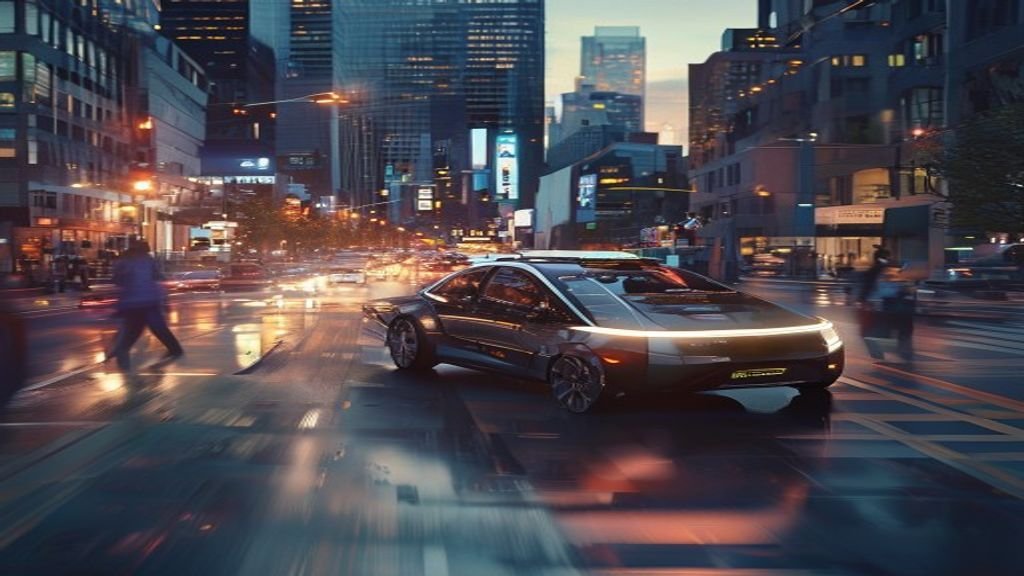
Robotaxi Reality Check: The Road Ahead Is Still Messy
Robotaxis keep pulling the future closer. In some cities, autonomous ride services are no longer rare pilot programs or carefully staged demos. They’re visible, bookable, and increasingly part of the mobility conversation.
But the latest reality check around robotaxis lands with a more grounded message: getting a self-driving taxi onto public roads is one thing. Turning it into a dependable, scalable transportation business is something else entirely.
That distinction matters more now than ever. The industry has moved past the phase where every milestone could be framed as proof that autonomy had basically arrived. Now the tougher questions are front and center. Can these systems handle unpredictable streets every day? Can companies expand without running into operational limits, regulatory friction, or rising costs? And can riders trust the service as a normal part of city life, not just a novelty?
That’s the shift happening across mobility right now. Robotaxi companies are no longer judged mainly on technical promise. They’re being judged on execution.
Why it matters
Robotaxis are becoming a real transportation category, but real-world deployment is exposing the gap between impressive autonomy demos and the daily grind of operating a safe, reliable, city-scale service.
For years, the robotaxi story was powered by bold timelines and giant expectations. The pitch was simple: remove the human driver, lower operating costs over time, and unlock a safer, more efficient ride-hailing network. That logic still drives investment and product strategy across the autonomous vehicle space.
What has changed is the standard for success. A smooth ride on a mapped route is not enough. Cities, regulators, and riders want to know how autonomous fleets behave when traffic gets chaotic, roads change, weather shifts, or emergency situations interrupt the script. That’s where the romance of automation meets the messiness of urban transport.
The current robotaxi moment is less about whether the technology works in a limited sense and more about whether the entire service model holds up. Dispatch systems, remote operations, maintenance, charging, cleaning, customer support, insurance exposure, and public perception all matter. In practice, robotaxi deployment is as much an operations challenge as a software one.
That’s also why expansion tends to look slower and more constrained than the hype cycle once suggested. Companies may launch in specific geofenced areas, under certain conditions, with carefully managed fleets and detailed oversight behind the scenes. That doesn’t mean progress is fake. It means autonomy is being introduced in the only way that makes sense: gradually, selectively, and under heavy scrutiny.
For the broader mobility market, this is a healthy correction. It pulls the conversation away from futuristic branding and toward transportation fundamentals. If robotaxis are going to compete with ride-hailing, public transit, and car ownership, they have to prove more than technical capability. They have to prove availability, consistency, and value.
There is also a political layer to all of this. Once autonomous vehicles operate as a public-facing service, every disruption gets amplified. Traffic incidents, service pauses, local complaints, and safety reviews can quickly influence expansion plans. In other words, robotaxis don’t just need to drive well. They need to fit into the social and regulatory fabric of the cities they want to serve.
Key points
- Robotaxi rollouts are advancing, but mostly in narrow, controlled deployment conditions.
- The main debate is shifting from technical possibility to operational reliability.
- Scaling an autonomous fleet requires solving logistics, regulation, and public trust at the same time.
- Economic viability remains one of the biggest open questions in the category.
That economic question may end up being the hardest one. Even if autonomy improves, running a fleet of sensor-heavy vehicles with support infrastructure behind it is not automatically cheap. The long-term case for robotaxis still depends on reaching a level of efficiency and utilization that remains difficult to prove early on.
None of this means the robotaxi push is stalling. It means the industry is entering a more honest phase. The future is not arriving all at once, and it is not unfolding evenly. It is being built route by route, city by city, rule by rule.
That may be less flashy than the original promise. It is also much closer to reality.
Sources
- TechCrunch — TechCrunch Mobility: Robotaxi reality check