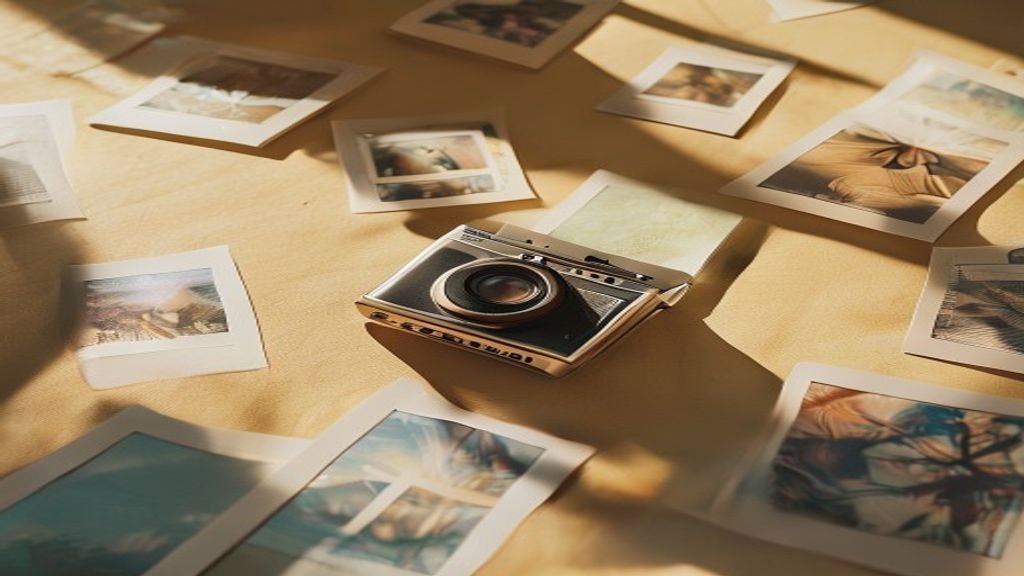
Fujifilm’s Instax Wide 400 keeps instant photography simple — just bigger
Instant photography has survived the smartphone era by refusing to compete on the phone’s terms. It is slower, less precise, and definitely less efficient. That is also exactly why people still like it.
The Instax Wide 400 fits neatly into that logic. Instead of trying to turn instant photography into a feature-packed camera category, Fujifilm appears to be doing the opposite: keeping the experience easy, recognizable, and fun, while making the end result physically larger.
That bigger format is the whole point. The appeal of the Wide line has never really been subtle. More space on the print means more room for group shots, travel scenes, and the kind of casual photos that are meant to be passed around, pinned up, or dropped into a bag rather than endlessly edited on a screen.
There is something refreshingly direct about that. In a gadget market that often treats complexity as innovation, the Instax Wide 400 leans into the idea that ease of use is still a feature.
That matters because instant cameras live or die on friction. If a device takes too much setup, too much menu diving, or too much explanation, it starts to lose the spontaneity that makes the format work in the first place. The best instant camera is usually the one people actually hand to a friend without needing to explain it.
The Wide 400 seems built with that reality in mind. It extends a formula that already makes sense for social photography: point, shoot, wait, share. That sequence is old-school, but it remains surprisingly effective in a world where most pictures never leave the camera roll.
Why it matters
Instant cameras are having a long second life because they do something phones usually don’t: they make photos feel physical, immediate, and social. A bigger print pushes that appeal further, especially for group shots, events, and casual keepsakes where the object matters as much as the image.
The larger print size also changes how people use an instant camera. Small instant shots can feel intimate or novelty-driven. Wider prints are often better suited to shared moments. You can fit more into the frame, and the final image feels less like a tiny token and more like a proper keepsake.
That makes the Wide 400 especially easy to understand in practical terms. It is not selling a professional imaging workflow. It is selling presence. Birthday tables, road trips, dinner parties, reunions, vacations — these are the situations where instant photography still lands hard, because the photo becomes part of the event itself.
There is also a broader consumer-tech angle here. Devices like this keep finding an audience because not every product has to be smarter to be better. Sometimes the win is making a device more tactile, more obvious, and more satisfying to use in the moment.
That is part of the reason instant cameras continue to coexist with phones instead of getting wiped out by them. Phones are unmatched for convenience, editing, storage, and sharing. But an instant camera offers something else: a finished object with almost no delay between capture and ownership.
The Instax Wide 400 appears to understand that distinction. It is not chasing computational photography or trying to out-spec a phone camera. It is leaning into the analog-adjacent charm that keeps instant film relevant, while making the final print more useful and more visible.
What stands out
- The Instax Wide 400 sticks with a straightforward, low-learning-curve design.
- Its main pitch is obvious but effective: wider instant prints with more room for people and scenes.
- The camera plays to social use cases like parties, trips, and shared snapshots rather than technical photography.
- It reflects a broader trend in consumer tech toward tactile, low-friction devices that coexist with smartphones instead of replacing them.
That may be the smartest thing about it. The camera is not asking users to adopt a new habit. It is simply making an existing one a little more expansive — literally — while preserving the simplicity that made Instax popular in the first place.
For a category built on immediacy and charm, that is probably enough. And for people who want instant photos that feel a bit less cramped and a bit more shareable, it is the kind of update that makes immediate sense.
Sources
- TechCrunch — The Instax Wide 400 builds on instant photography’s simplicity and stretches it, literally