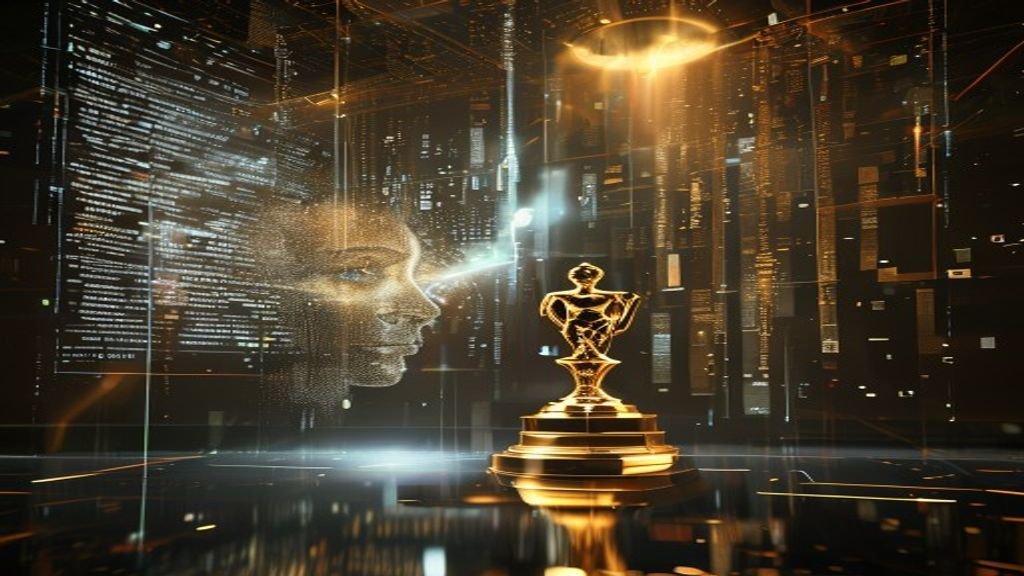
Oscars Draw a Bright Line: AI-Generated Actors and Scripts Are Out
The Academy is taking a firmer stand on generative AI.
According to new reporting, AI-generated actors and AI-generated scripts are now ineligible for Oscars. The move marks one of the clearest signals yet that Hollywood’s top awards body wants to preserve a human core in the categories it recognizes.
That matters because AI has shifted from a background production tool to something much bigger. In just the past few years, studios, startups, and creators have pushed generative systems into script development, voice cloning, digital doubles, and fully synthetic performances. What used to sound experimental is now showing up in real production workflows.
The Academy’s new line does not erase AI from filmmaking. Far from it. AI-assisted tools are already being used across editing, visual effects, restoration, dubbing, previsualization, and other parts of the process. But this decision appears to draw a distinction between using software to support human-made work and replacing the human creative contribution altogether.
That distinction is where the bigger fight has been heading.
For the film business, the argument over AI has never only been about efficiency. It has also been about authorship, labor, consent, and what counts as an artistic performance. Writers and actors have spent the last few years pushing back against scenarios where their work, likeness, or voice could be replicated, remixed, or displaced by machine-generated output.
By making AI-generated actors and scripts ineligible, the Academy is effectively saying that some categories of recognition still require a human source at the center. In practical terms, that could influence how awards-focused films are developed, marketed, and positioned. Prestige projects tend to chase legitimacy as much as innovation, and Oscar eligibility still matters in that equation.
Why it matters
Hollywood has been searching for a workable boundary around AI. This rule does not settle every debate, but it gives the industry a concrete one: fully AI-generated performances and writing won’t qualify for the highest level of awards recognition. That could shape not just awards campaigns, but creative choices made much earlier in production.
The decision also arrives at a time when the definition of “AI-generated” is becoming increasingly important. Many tools now blur the line between assistance and authorship. A script may be polished with AI suggestions. A performance may be enhanced with digital tools. A face may be de-aged, altered, or partially synthesized. The harder question is where augmentation ends and substitution begins.
That gray area is likely to remain. Rule changes can set direction, but they do not magically simplify fast-moving technology. Filmmakers and studios will still need clearer standards around disclosure, credit, and the extent of machine-generated work in a final project.
Even so, the headline is straightforward: if the actor is generated by AI, or the script is generated by AI, that work is not getting into the Oscar race.
Key points
- The Academy has reportedly made AI-generated actors and scripts ineligible for Oscars.
- The update suggests a stronger preference for human authorship and performance in major awards recognition.
- AI-assisted production tools are not the same thing as fully AI-created work, and that distinction now matters more.
- The ruling could influence how studios use generative AI on projects built for prestige and awards attention.
This is bigger than one awards season.
Oscar rules often act as cultural signals for the broader film business. The Academy is not deciding whether AI will be used in movies. That ship has already sailed. What it is deciding is whether fully AI-generated creative work belongs in the same awards lane as human performances and human-written scripts.
For now, the answer is no.
Sources
- TechCrunch — AI-generated actors and scripts are now ineligible for Oscars